ESOTERIC LIBRARY
A Library for the Seekers of Hidden Truth

Book
Included with membership.
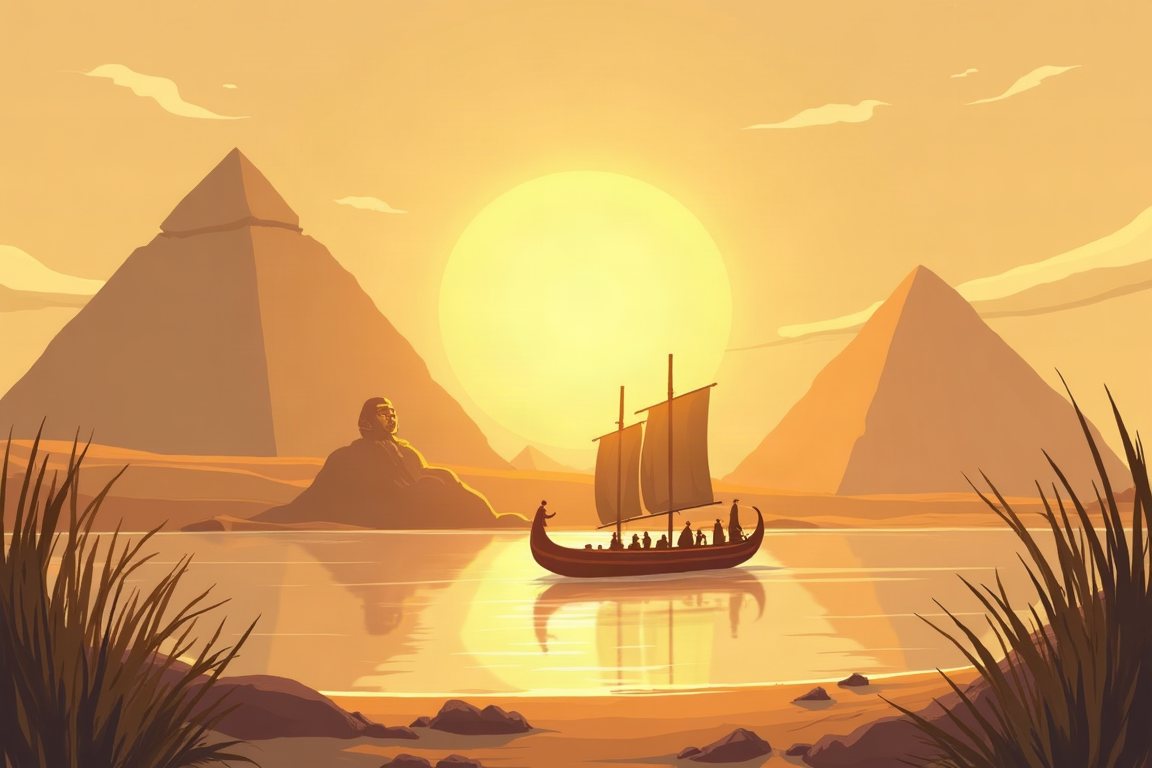
Ahmed Osman and Robert Bauval begin from a sharp claim: Egypt was not a civilization that happened to build temples, it was a temple that happened to call itself a civilization, and the spiritual engine it ran was dismantled rather than worn out. Restoring it starts with seeing Egypt as its own people saw it, as Kemet, the black land, a name the country carried for thousands of years before anyone called it Greek.
The book moves in three sweeps. The first stays with the pharaonic material: the language, the temple as an engine of initiation, and ma'at as the law binding cosmos and state. The second follows the thread Osman has pursued across his career, the argument that the biblical and Quranic stories of Israel and of early Islam have Egyptian roots, including his reading of Moses and of the Prophet Muhammad's years in Makkah. The third sweep runs through modern Egypt, from the national movement under Saad Zaghloul and the reign of Fuad to the upheavals of recent decades, which the authors read as one long contest over the same inheritance.
This is popular investigative history in the alternative-Egyptology school, written for the general reader and documented with a substantial bibliography. Its claims are stated clearly enough to be checked against the sources it names, whether one ends up convinced or not. Either way the book makes a firm case for its simplest point: Egypt's spiritual achievements were never a preamble to somebody else's story, and the questions the country still asks the world have not been answered yet.
Essays from the reading room that share this book's ground.
Need a hand with your account, a book or a subscription?
support@esotericlibrary.app Sign in to live-chat with usSigned-in readers get live chat, tickets and replies on their Support page.