ESOTERIC LIBRARY
A Library for the Seekers of Hidden Truth

Book
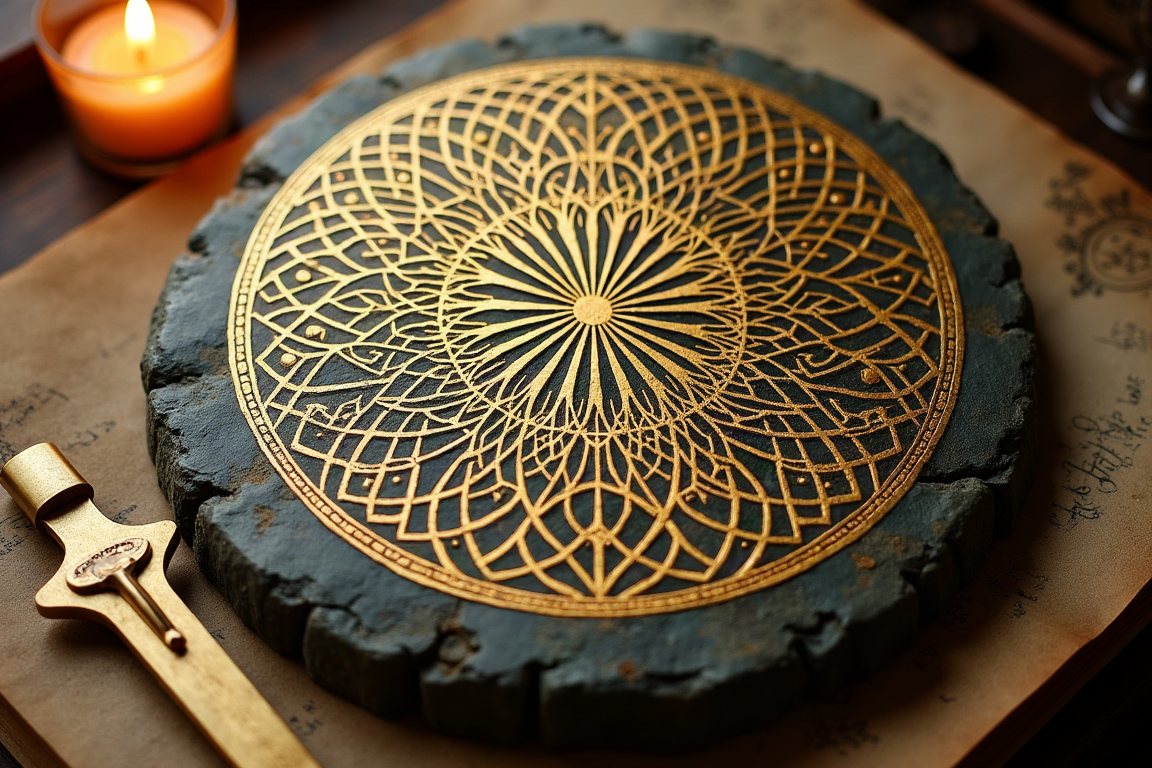
The Emerald Tablet is the shortest and most cited document in alchemy, the inscription credited to Hermes Trismegistus on which the whole maxim of correspondence, as above so below, turns. This compilation gathers what is actually known and said about it. The historical essay traces the tablet's appearance in the West through the Secretum Secretorum and the Kitab Sirr al-Asar translations of Johannes Hispalensis and Philip of Tripoli, the earlier Arabic versions found by Holmyard and Ruska in the Jabirian corpus and the Book of Balinas the Wise, and the scholarly debate over origins running from Apollonius of Tyana to a possible Chinese source. The heart of the book is the set of translations itself: the Jabir ibn Hayyan version, the Ruska Arabic text, the twelfth century Latin, and further renderings, each numbered line by line so the versions can be set side by side. Textual remarks weigh the variant readings, meditatione against mediatione, and the commentary section carries readings from the tradition, including a commentary of Ibn Umail. For a text this small, the apparatus is remarkably complete: history, translations, variants and commentary in one slim volume.
Essays from the reading room that share this book's ground.
Need a hand with your account, a book or a subscription?
support@esotericlibrary.app Sign in to live-chat with usSigned-in readers get live chat, tickets and replies on their Support page.